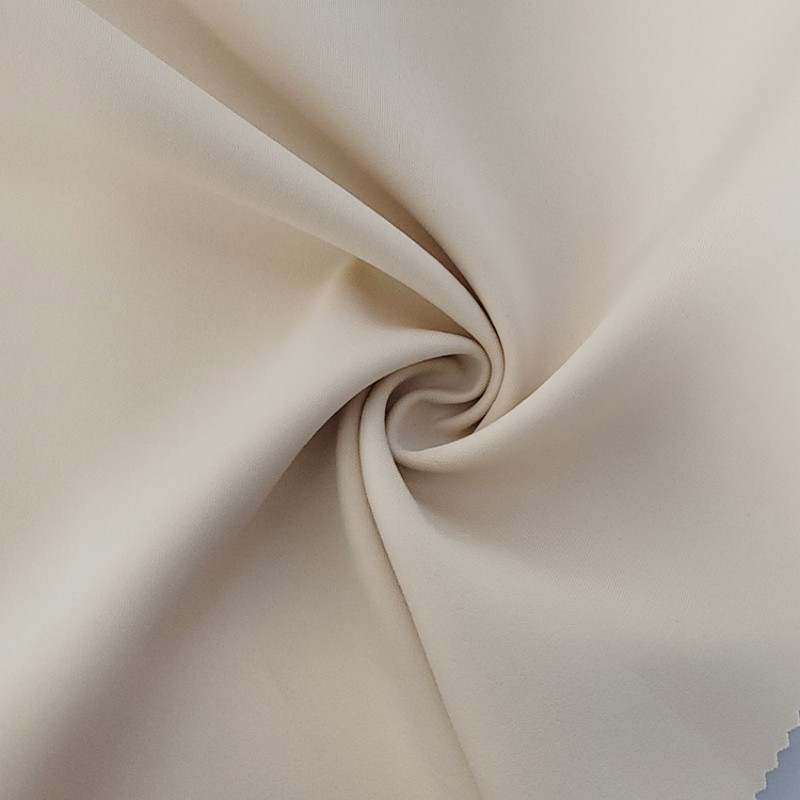
Scuba knit fabric and neoprene laminated rubber fabric are two distinct textile materials with different raw materials, manufacturing structures and core functional properties. Scuba fabric is a dense double-knit polyester-spandex textile; neoprene relies on foamed polychloroprene rubber as its core substrate. Scuba delivers soft drape and moderate air permeability, while neoprene features thick closed-cell foam for cushioning and thermal retention. This guide clarifies their structural, functional and application differences with standard textile industry parameters.
Key Takeaways
- Raw material gap: Scuba = polyester + spandex double knit; Neoprene = foamed chloroprene rubber laminated with textile lining
- Functional bias: Scuba balances light stretch, breathability and color performance for fashion & everyday activewear; Neoprene provides full water barrier and superior insulation for aquatic protective gear
- Selection logic: Prioritize scuba for structured lightweight apparel; choose neoprene for cold, fully submerged water scenarios requiring heat lock.
What is scuba fabric?
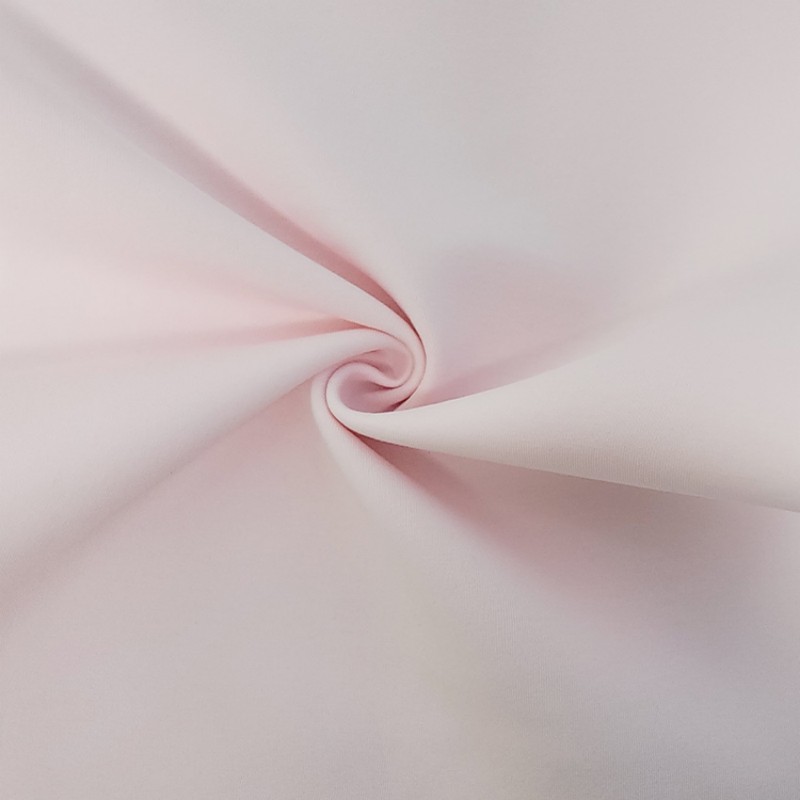
Scuba fabric definition
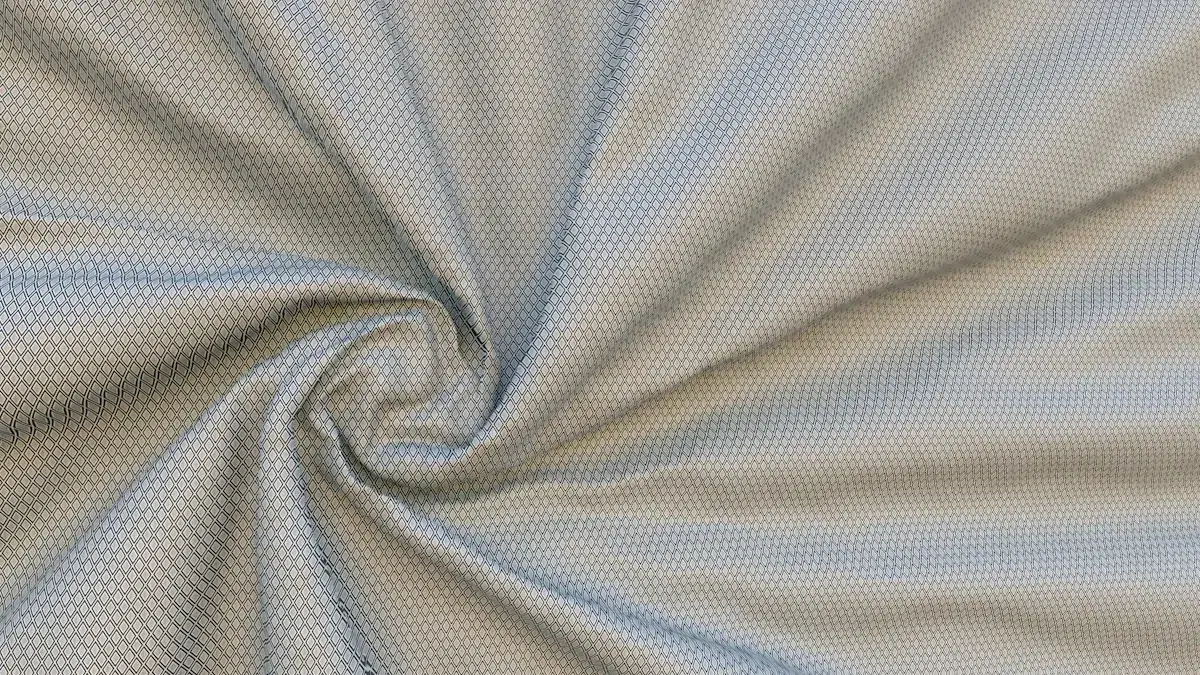
Scuba knit is a mature double-weft knit textile blended with polyester and spandex elastane, produced via double-bed circular knitting machines. The interlocked double-layer knit structure delivers a compact, smooth hand feel with inherent structural stiffness. Professional textile manufacturers implement standardized dyeing, dimensional stabilization and post-finishing processes to lock color fastness and minimize shrinkage; finished batches undergo uniform stretch and tensile strength testing before delivery.
Key properties of scuba fabric
Scuba knit features stable tensile strength and consistent 4-way stretch with excellent shape recovery after repeated stretching. Its commercial weight range falls between 150–550 GSM, corresponding to fabric thickness of 0.5–2 mm. Critically, scuba fabric only offers surface water repellency rather than full waterproofness: light splashes bead off the surface, but prolonged immersion allows moisture penetration. Custom functional finishing such as anti-pilling, moisture-wicking and quick-dry treatments can be applied during production. Qualified scuba textiles can pass third-party textile safety and recycled material certifications including OEKO‑TEX Standard 100 and GRS.
Common uses for scuba fabric
| Application Type | Description |
|---|---|
| Dresses and skirts | Good for clothes that need shape or volume. |
| Tops and bomber jackets | Makes clothes look sleek and modern. |
| Activewear and yoga outfits | Gives stretch and lasts a long time. |
| Sports fashion | Used for leggings, jackets, and training wear. |
| Avant-garde or costume fashion | Helps create bold shapes and styles. |
What is neoprene fabric?
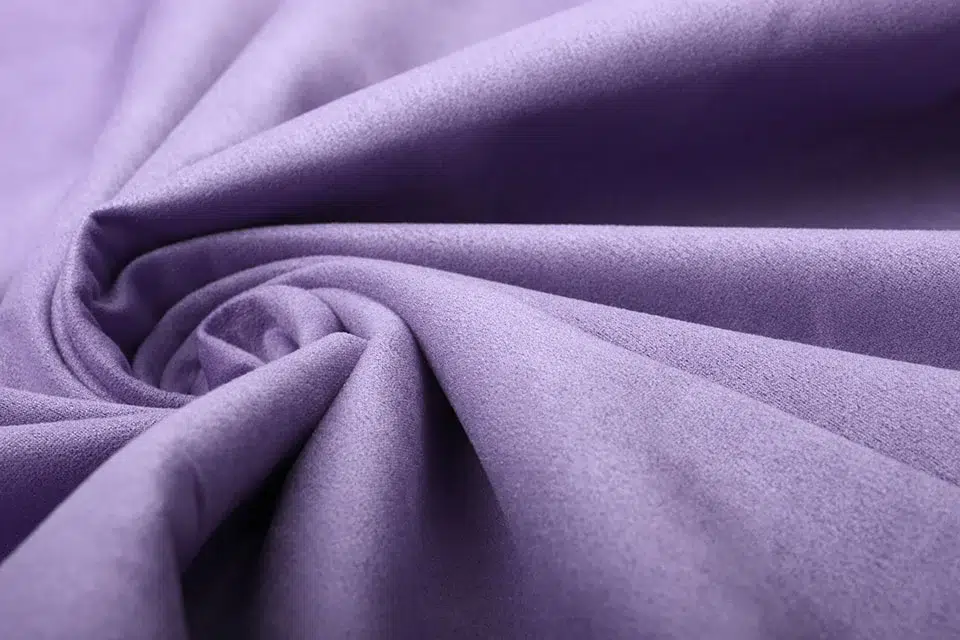
Neoprene fabric definition
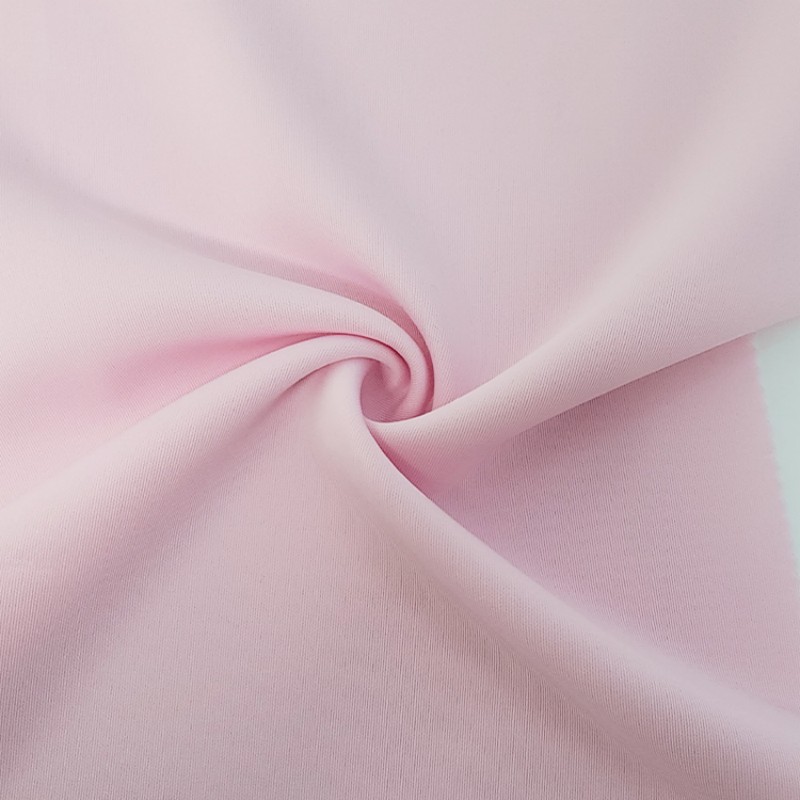
Neoprene textile substrates are manufactured from foamed chloroprene rubber via free-radical polymerization. Initiators, metal oxide crosslinkers and antioxidant additives stabilize the rubber molecular structure before foaming into closed-cell foam sheets. Final usable neoprene fabric is produced by laminating knit/woven textile liners to both sides of the foam core. The closed-cell foam structure delivers complete water barrier performance and chemical resistance. Specialized reinforced neoprene grades (such as super techno neoprene) are engineered for heavy-duty industrial and marine applications.
Main chemical components of neoprene fabric
| Component | Functional Role |
|---|---|
| Chloroprene Monomer | Base polymer raw material, provides inherent rubber elasticity |
| Radical Initiators (Potassium Persulfate) | Triggers polymerization crosslinking reaction |
| Metal Oxide Crosslinkers | Reinforces molecular bonding, improves tensile stability |
| Antioxidant Additives | Suppresses aging from UV and long-term compression |
| Mineral Fillers (Carbon Black, Calcium Carbonate) | Boosts tear resistance and adjusts foam density |
Key Functional Properties of Neoprene
Raw chloroprene foam delivers high elongation and excellent compression recovery; laminated neoprene fabric retains reliable stretch after repeated deformation. Commercial neoprene foam density ranges from 120–180 kg/m³, with standard specific gravity of 1.35–1.45. Its closed-cell foam core creates impact buffering, full waterproof sealing and long-term service life under marine and industrial conditions.
Uses of neoprene fabric
- Marine & water sports: Diving wetsuits, thermal protective gloves, buoyancy pads (core market relying on full waterproof insulation)
- Medical rehabilitation: Orthopedic braces, compression support sleeves
- Industrial manufacturing: Sealing gaskets, vibration dampening components
- Consumer accessories: Shock-absorbent laptop sleeves, mouse pads
- Automotive components: Heat-resistant sealing and shock buffer partsNeoprene’s dual advantages of waterproof barrier and thermal insulation make it the standard technical substrate for protective and industrial products exposed to water or impact.
Scuba fabric vs. neoprene
Structural Difference & Hand Feel
Scuba knit relies purely on double circular knitting without foam or rubber core; its surface is smooth, lightweight and pliable with soft textile drape, suited for form-fitting apparel that requires clean, tailored silhouettes.
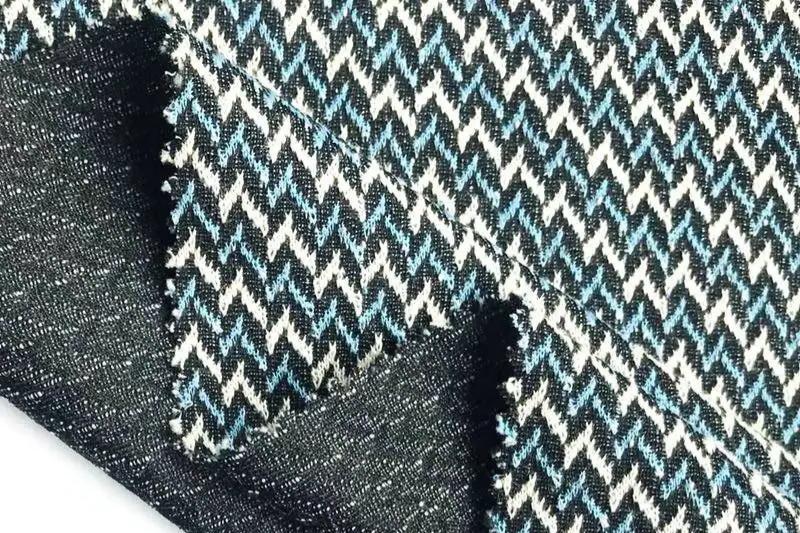
Neoprene fabric adopts a three-layer laminated structure: textile liner + closed-cell chloroprene foam core + outer textile face. The foam core creates distinct thickness, spongy cushioning and solid heavy hand feel, making it ideal for protective gear requiring shock absorption and thermal lock.
In direct comparison: scuba delivers lightweight textile softness; neoprene features dense foam padding and heavier overall weight.
Flexibility and thickness
Both fabrics can stretch, but their thickness is not the same. Scuba fabric stretches in every direction. It fits close but does not squeeze. Factories make scuba fabric in many weights, from thin to thick. Neoprene also stretches but does not squish down much. How thick neoprene is changes what it is used for. Makers sell neoprene in a few common thicknesses. The table shows some usual sizes:
| Material | Thickness (mm) |
|---|---|
| Neoprene | 3 |
| Neoprene | 5 |
| Neoprene | 7 |
Thicker neoprene has more shape and support. Factories use thick neoprene for wetsuits and gear that protects. Thin neoprene is good for things like laptop sleeves. Scuba fabric is almost never as thick as neoprene. Most scuba fabric clothes feel lighter and bend more.
Air Permeability & Thermal Insulation
Air permeability describes the volume of air that circulates through material pores. As a porous knit textile, scuba fabric allows moderate air flow to dissipate body heat, making it comfortable for warm-weather daily and light athletic wear with minimal heat retention.
Neoprene’s closed-cell foam core blocks air and liquid water penetration entirely, trapping static air inside cells to deliver outstanding thermal insulation in cold, submerged environments. Lab test data confirms thermal retention correlates directly with neoprene thickness: in 10°C water, 7 mm neoprene socks retained 82% body heat after 60 minutes, 41% higher thermal retention than 3 mm thin neoprene.
Neoprene’s heat-locking performance is unmatched for aquatic protective gear such as wetsuits, gloves and dive boots; scuba knit cannot replicate this insulation effect, prioritizing breathability over warmth retention.
Comfort and weight
How comfy a fabric is depends on how it feels and moves. Scuba fabric is soft and light. It stretches and goes back to its shape. Makers use it for clothes that need to be comfy and stretchy. Scuba fabric can be different weights, but most are easy to wear. Neoprene is heavier. It makes things feel bigger and stronger. Factories use neoprene for things that need to protect or support. When neoprene is thicker, it gets heavier. Thick neoprene does not bend as much but keeps you warmer. People notice that neoprene clothes feel warmer and have more padding.
Tip: Scuba fabric is great for light clothes. Neoprene is best for cold or tough places.
Choosing between scuba fabric and neoprene
Best uses for scuba fabric
Fashion designers like scuba fabric because it is strong and useful. People use this material for activewear, dresses, jackets, hoodies, leggings, and tight tops. It is also good for bags and laptop sleeves. Scuba knits are found in home items like pillows and chair covers. The fabric does not wrinkle and keeps its color. It works with many patterns. Scuba fabric feels smooth and stretches well. This makes it good for both everyday and fancy clothes. Makers and sellers say scuba fabric is great for travel clothes and costumes.
Tip: Scuba fabric lets some air through and keeps its shape after washing.
Best uses for neoprene
Sportswear makers use neoprene for tough sports clothes. Jackets, belts, wetsuits, and tight clothes use neoprene because it bends and supports well. Neoprene keeps heat in and blocks water. This is why people like it for water sports and medical supports. Big brands keep making new things with neoprene to help athletes do better and last longer. Factories make neoprene for work gear, medical braces, and things that need extra safety.
Pros and cons
| Feature | Scuba Fabric | Neoprene |
|---|---|---|
| Structure | Lightweight double knit | Heavier with foam core |
| Stretch | Excellent (spandex blend) | Minimal |
| Breathability | Moderate | Low |
| Water Resistance | Not waterproof | Water-resistant |
| Fashion Use | High (jackets, dresses) | Limited (mostly wetsuits) |
| Maintenance | Machine washable | Hand-rinsing, air-drying |
| Environmental Impact | Recyclable options available | Petroleum-based, higher impact |
Note: Picking one of these fabrics depends on what you want the clothes to do, how you will clean them, and how they affect the environment.
Scuba fabric and neoprene comparison table
Factories and sellers like to compare scuba fabric and neoprene. This helps buyers pick the best material for their needs. Both fabrics use man-made fibers. They are used in clothes, home items, and tech accessories. Each fabric has special features that make it good for certain jobs.
Here is a table that shows how scuba fabric and neoprene are alike and different:
| Property | Scuba Fabric | Neoprene |
|---|---|---|
| Fabric Composition | Synthetic fibers | Synthetic fibers |
| Structure | Double-knit | Rubber foam core, laminated |
| Stretchability | High | High |
| Thickness Range | 1–3 mm | 3–7 mm |
| Weight (GSM) | 110–550 | 110–500 |
| Breathability | Low | Low |
| Water Resistance | Moderate | High |
| Thermal Insulation | Good | Excellent |
| Tensile Strength | 5–10 MPa | 5–10 MPa |
| Recovery Rate | >95% after 100 cycles | >95% after 100 cycles |
| UV Resistance | Good | Good |
| Prone to Pilling | Medium | Medium |
| Washing Temperature | Cold | Cold |
| Print Compatibility | Digital, Rotational | Digital, Rotational |
| Main Uses | Fashion, sportswear, decor | Wetsuits, braces, accessories |
Tip: Both fabrics stretch well and last a long time. Neoprene keeps water out better and stays warmer. Scuba fabric is lighter and is good for clothes that look neat and have shape.
Important things to check for both fabrics are:
- How well they keep heat
- How strong they are
- How much they stretch
- How well they block water
- How well they resist chemicals
Factories and big buyers can use this table to find the best fabric for their project.
Scuba fabric and neoprene are not the same in how they are made or used. Experts say both fabrics can stretch and bend, but in different ways:
| Fabric Type | Stretch Type | Flexibility Description |
|---|---|---|
| Scuba Knit | 2-way | Stretches a bit and keeps its shape well |
| Neoprene | High | Stretches a lot and goes back to normal easily |
FAQ
What is the main difference between scuba fabric and neoprene?
Scuba fabric is made with a double-knit method. Neoprene is a type of rubber that is man-made. Factories use scuba fabric to make clothes for fashion. Makers use neoprene for wetsuits and gear that protects people.
Can scuba fabric replace neoprene in water sports?
Scuba fabric cannot be used instead of neoprene for water sports. Neoprene keeps people warmer and blocks water better. Sellers say neoprene is best for wetsuits and diving suits.
Is scuba fabric suitable for custom manufacturing?
Yes, factories and sellers pick scuba fabric for custom clothes. It is flexible and comes in bright colors. Scuba fabric is easy to change for fashion and sportswear.